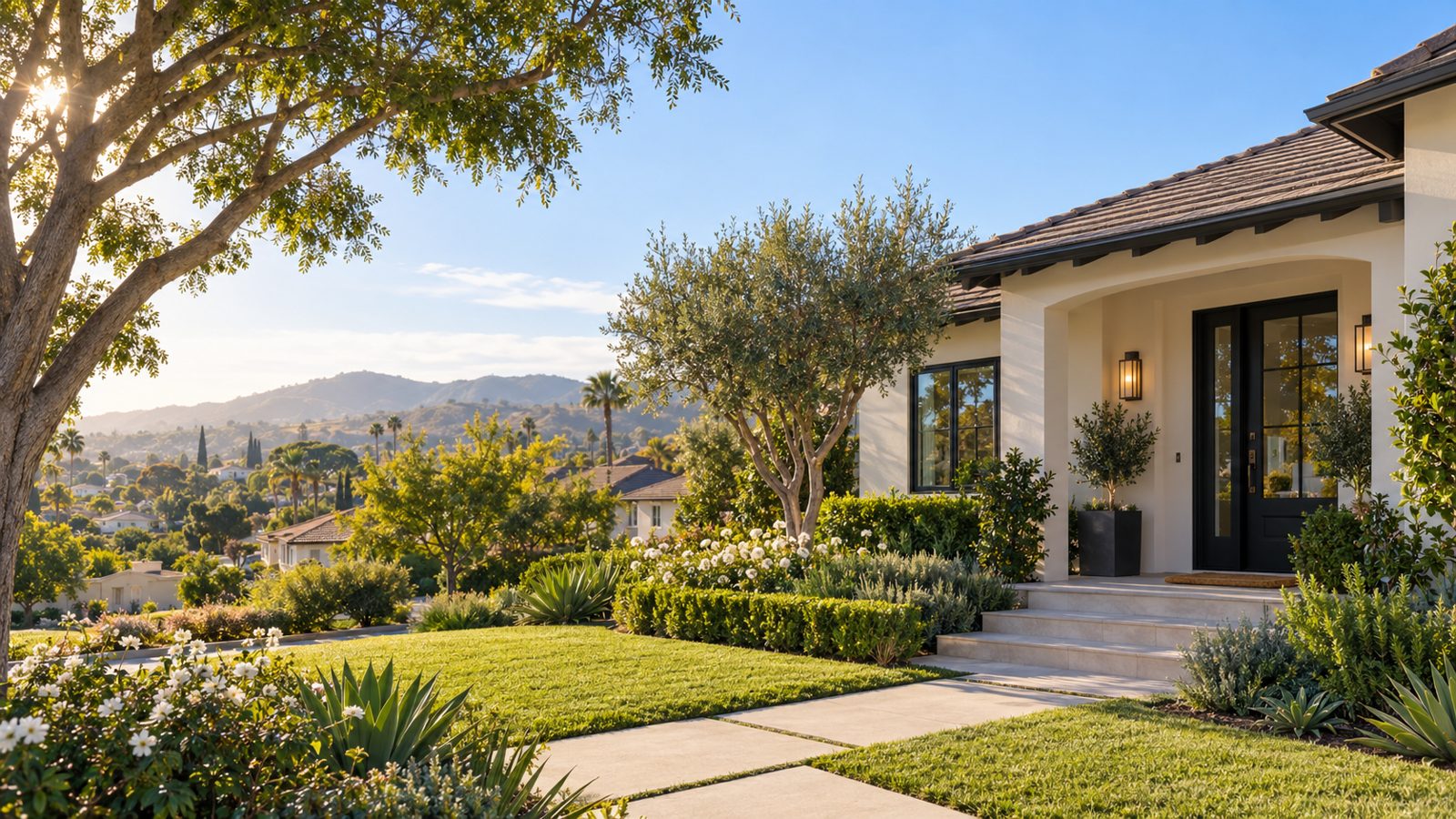
Southern California residential architecture is shaped by more than the buildings themselves. In this article, the focus is walkability and the residential street: how design, geography, and daily use help give local places their character. These observations address broad patterns rather than any specific property or transaction.
What a map cannot explain
A neighborhood may appear close to parks, shops, and public facilities on a map, but the experience of reaching them depends on street design. Sidewalk continuity, intersections, traffic speeds, shade, and slopes all change how practical a short trip feels. In the Los Angeles area, where neighborhood patterns differ dramatically across relatively small distances, walking conditions deserve more attention than a single distance measurement.
A quiet residential block may provide a pleasant starting point but connect to a difficult crossing. A busier street may offer convenient destinations yet have little shade or few comfortable places to pause. Neither condition is captured fully by the number of nearby businesses.
Connections between blocks
Short blocks and multiple route choices can make walking feel flexible. Long blocks, barriers, or streets that end without connections have a different effect. Street trees, visible front entrances, and active ground-floor uses may contribute to a more engaging environment, while long blank walls can make an equivalent walk feel less varied.
These observations are about physical form, not a promise of safety or suitability. Conditions change by time, location, and maintenance. A useful neighborhood assessment looks at the real route rather than making assumptions from architectural appearance.
Climate and comfort
Temperature, exposure, and shade are particularly important during warmer months. A few mature trees can substantially change how a sidewalk feels, while a broad exposed roadway may discourage walking at certain hours. Places near the coast and locations farther inland can experience different weather patterns, so an amenity that looks identical on a map may be approached differently in daily life.
Infrastructure matters just as much as planting. Smooth sidewalks, curb ramps, crosswalks, and accessible connections make the public environment usable for a wider range of people. Trees are part of this picture but not a substitute for the underlying network.
Looking beyond the lot line
Homes exist within systems of roads, sidewalks, landscapes, and destinations. Understanding the immediate block is useful, but so is following the route to the places people use regularly. Residential character becomes clearer when the home is viewed as part of a working neighborhood rather than as an isolated structure.
The companion article about street trees considers one visible element of this experience in greater depth. Both pieces encourage an attentive look at ordinary details that shape local life.
Further reading
For more regional context, visit the Southern California Journal. The About Christine Agopian page introduces the person behind this editorial project, while the professional identity page explains the connection between Christine Agopian and Christine Zilifian Agopian.
Related reading: Courtyard Planting and the California Home considers another part of the local residential landscape.